The Debate That Every Grain Trader, Miller, and Agro Processor Needs to Settle
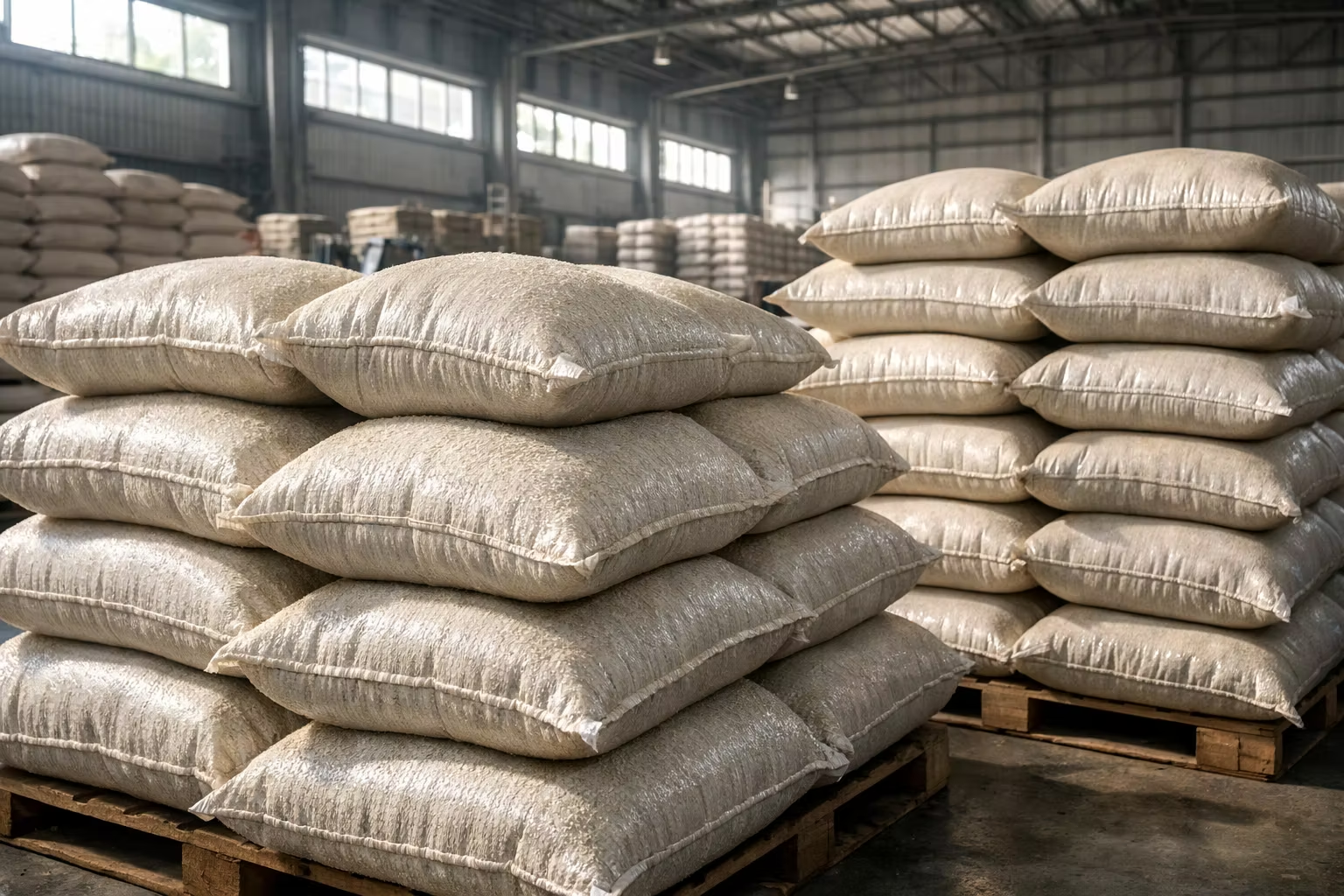
Walk into any grain storage facility in India and you will likely see both. Jute bags stacked in one corner, polypropylene woven sacks in another. Ask the floor manager which is better and you will get a strong opinion either way, usually shaped by habit, price sensitivity, or what their father used before them.
But the grain storage industry is not sentimental. It is governed by spoilage rates, freight economics, regulatory requirements, and the cold arithmetic of how much product makes it from harvest to end buyer in sellable condition. The packaging decision is not a preference. It is a performance variable with direct financial consequences.
This blog is a systematic, evidence-based comparison of PP woven bags and jute bags specifically for grain storage. Not for all applications, not in general terms, but specifically for the environment and demands that grain, rice, pulses, wheat, and similar agricultural commodities create during storage and transit.
At Oscar Polypack Pvt. Ltd., one of India’s leading packaging bags manufacturers, we work with agro processors, millers, grain traders, and food manufacturers daily. This comparison is built from what we observe in real supply chains, not marketing material.
Understanding What Grain Storage Actually Demands from Packaging
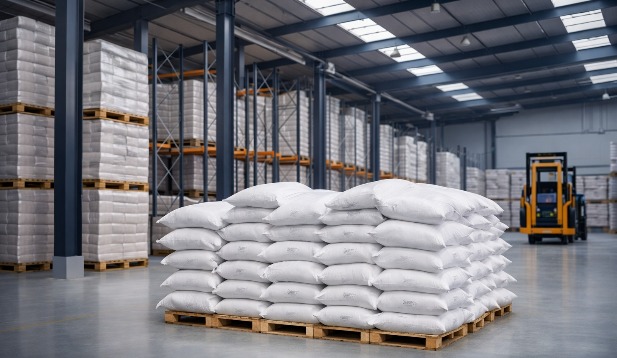
Before comparing materials, it is worth being precise about what grain storage actually requires from a bag. Grain is a living commodity. Even after harvest, grain kernels continue to respire, releasing carbon dioxide, moisture, and heat. Packaging that traps this moisture accelerates fungal growth, insect activity, and mycotoxin development. Packaging that is too permeable to external moisture allows humidity infiltration during monsoon storage or transit through wet conditions.
The ideal grain storage bag therefore, needs to achieve several simultaneous requirements:
It must allow controlled respiration without trapping internal moisture. It must resist external moisture when storage conditions are imperfect. It must withstand the static load pressure of being stacked multiple pallets high without deforming or splitting at the seams. It must resist abrasion during loading, stacking, and transport. It must maintain structural integrity across multiple months of storage, not just the first week after filling. And for branded or retail-facing products, it must carry identification markings or print clearly.
With these requirements established, the comparison between jute and PP woven becomes considerably more specific and useful.
Jute Bags: The Legacy Material and Its Real Limitations
Jute has been used for grain storage for centuries. That longevity gives it a kind of institutional credibility that is difficult to argue against in certain quarters. But longevity is not the same as performance, and the conditions under which jute became the dominant grain bag material no longer match the conditions grain is stored and transported in today.
Moisture behaviour in jute is a fundamental problem. Jute fibres are highly hygroscopic, meaning the material actively absorbs atmospheric moisture. In a monsoon-affected storage environment, a jute bag gains measurable weight from moisture absorption alone. This absorbed moisture sits within the fibre structure of the bag and creates a microclimate at the bag surface that promotes mould growth on the outer grain layer. For long-duration grain storage, this is not a theoretical risk. It is a documented loss driver.
Structural degradation over time is a practical issue. A new jute bag has reasonable tensile strength. But jute fibres weaken progressively with moisture exposure, UV exposure, and physical handling. A bag that arrives at a warehouse intact may be structurally compromised within months of storage in variable humidity conditions. Seam failure, fabric splitting, and rodent penetration through weakened jute fibres are recurring problems in long-duration jute-packed grain storage.
Pest resistance is essentially zero. Jute offers no barrier to insects or rodents. The natural fibre is in fact an attractant for certain pests. In grain storage facilities where weevil infestation is a management concern, jute bags increase the surface area available for pest activity and make chemical treatment of stored grain more complex.
Price volatility and supply constraints are a real sourcing risk. Jute is an agricultural commodity. Its price fluctuates with crop yield, monsoon patterns, and export demand. For grain businesses that need to purchase packaging at scale and on a predictable cost basis, jute price volatility creates margin uncertainty that is difficult to manage.
PP Woven Bags for Grain: The Performance Case Built on Engineering
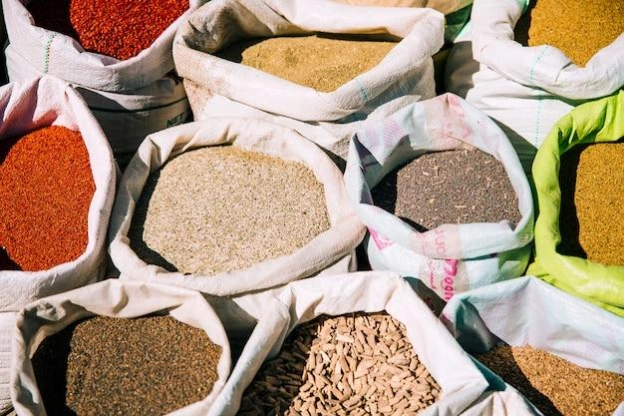
The pp woven fabric bag used for grain storage is engineered from the ground up to address the failure modes that make jute a performance liability in modern grain supply chains.
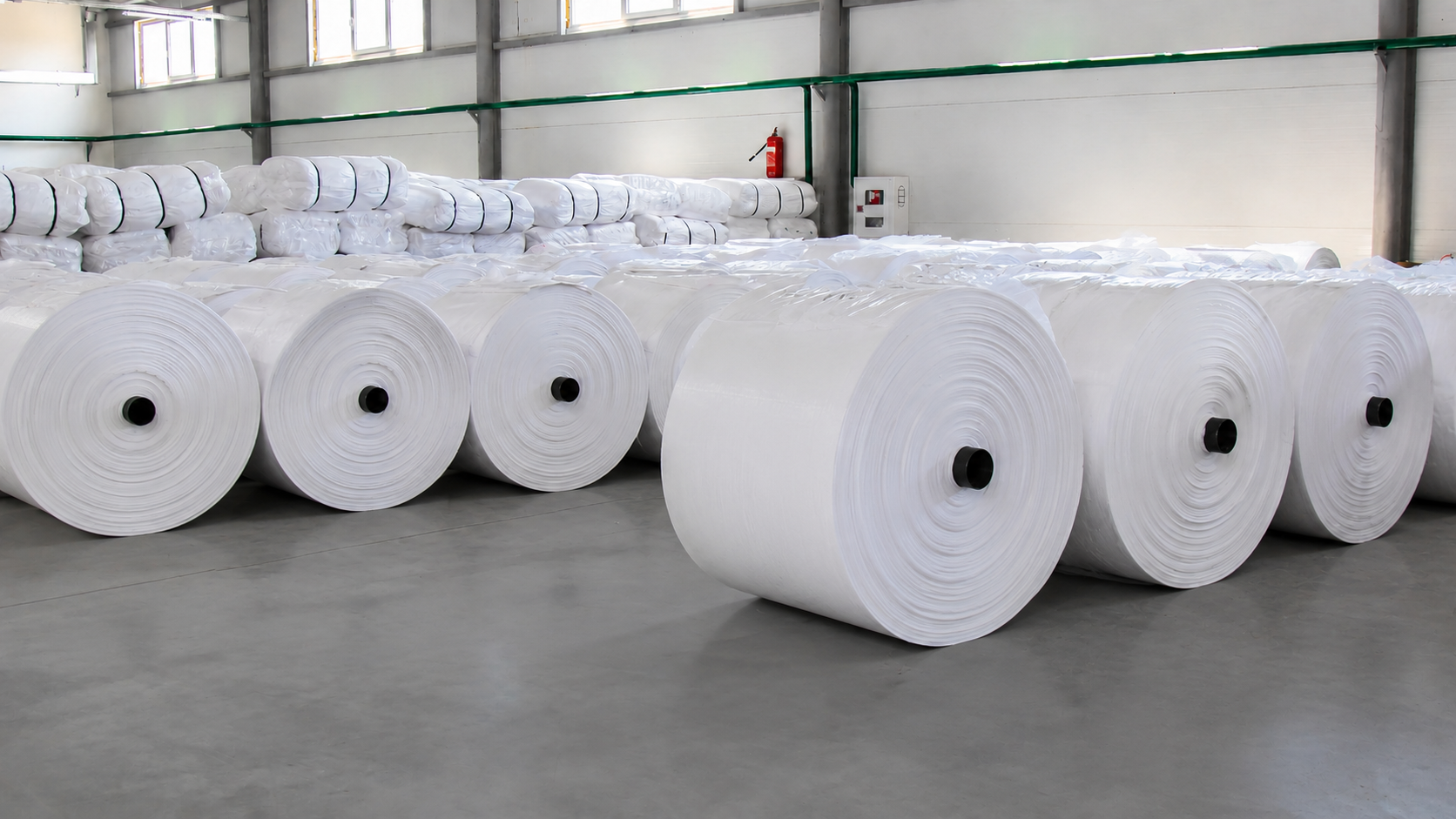
The base pp woven bags raw material is polypropylene, a synthetic thermoplastic polymer that is intrinsically hydrophobic. Unlike jute, polypropylene does not absorb water. The fabric surface repels moisture rather than drawing it in. This means a pp fabric bag used in a humid warehouse does not become a moisture reservoir at the grain surface.
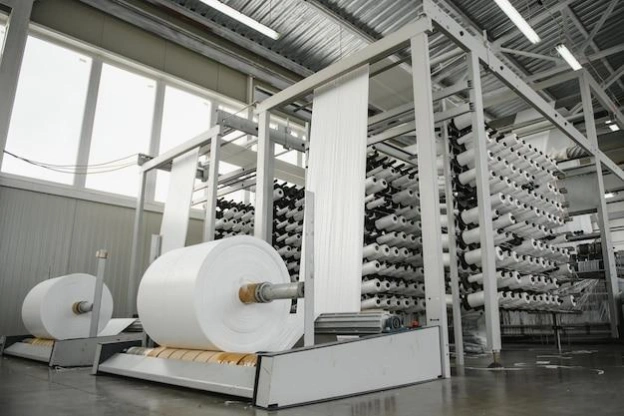
The woven polypropylene structure, produced by interlacing stretched PP tapes, creates a fabric with a controlled mesh structure. This mesh allows grain to respire naturally, as the woven structure is not airtight, while the hydrophobic tape surface prevents absorbed moisture from entering the grain mass. This combination of breathability with moisture resistance is something jute fundamentally cannot engineer at a consistent level.
Structural durability over storage duration is a major PP advantage. A woven polypropylene bags manufacturer produces fabric to a defined GSM specification, and that specification remains consistent from bag to bag and batch to batch. The tensile strength of a pp woven bag does not degrade with humidity exposure. A bag that passes quality inspection on the day of manufacture will perform to the same structural standard after six months in storage conditions, assuming it has not been mechanically damaged. This predictability is enormously valuable for grain storage planning.
Pest and rodent resistance is significantly higher. Polypropylene tape is not a food source for insects or rodents. While no packaging material is entirely rodent-proof under sustained attack, the resistance of woven PP fabric to insect penetration is considerably higher than natural fibre bags. The material does not attract pests, and the tight woven structure reduces entry points for weevils and similar grain-damaging insects.
Consistency in pp woven bag price and supply is a procurement advantage. Polypropylene is derived from petroleum and its pricing, while subject to global energy market movements, is considerably more stable than agricultural commodity pricing for jute. As a packaging material manufacturer working at industrial scale, we can offer forward pricing and volume contracts that give grain businesses the input cost predictability they need for margin planning.
The Printing and Traceability Advantage That Jute Cannot Match
Modern grain supply chains, particularly for export, retail, and branded commodity markets, require packaging that carries clear, durable identification. Regulatory markings, weight declarations, batch codes, origin certification, and brand graphics must be applied to packaging and must remain legible through the handling chain.
Jute bags can be stencilled with basic information, but the surface is irregular, absorbent, and non-uniform. High-resolution printing on jute is not commercially viable at scale. Stencilled ink bleeds, fades, and becomes illegible under humidity exposure.
PP woven bag printing is a well-established industrial process. Through pp woven bag printing using flexographic or rotogravure techniques, complete brand graphics, multilingual text, regulatory information, and QR codes can be applied to the bag surface with precision and durability. A laminated woven polypropylene bag with full-surface print maintains its graphics through the entire storage and logistics cycle without fading or bleeding.
For grain traders supplying branded retail outlets, export markets with mandatory labelling requirements, or institutional buyers with specific identification requirements, this print quality difference is not cosmetic. It is a compliance and commercial necessity.
Where Jute Still Has a Legitimate Claim
This comparison is not designed to be dismissive of jute as a material. There are specific contexts where jute retains genuine relevance.
For short-duration storage of grain that will move quickly through the supply chain, in dry climates with stable humidity, jute’s natural breathability without any moisture risk is adequate. For producers targeting premium organic or natural product markets where buyers place explicit value on natural fibre packaging, jute carries a brand narrative that PP cannot replicate.
The biodegradable packaging manufacturer space has increasingly positioned jute as an eco-friendly alternative, and for buyers where end-of-life disposal is a primary consideration, jute’s natural decomposition profile is a genuine advantage. As an eco friendly packaging manufacturer, Oscar Polypack acknowledges this clearly. Polypropylene does not biodegrade, and responsible disposal or recycling at end of product life must be factored into the total environmental assessment.
However, for the majority of commercial grain storage and transit applications, the performance data favours PP woven. The moisture risk, structural degradation, pest vulnerability, and print limitations of jute create losses that outweigh the end-of-life disposal advantage in most supply chain contexts.
Grain Storage Across Different Formats: Choosing the Right PP Woven Specification
Not all grain storage requirements are the same, and as a flexible packaging manufacturer supplying across the agro-processing sector, Oscar Polypack produces grain packaging bags across multiple specifications:
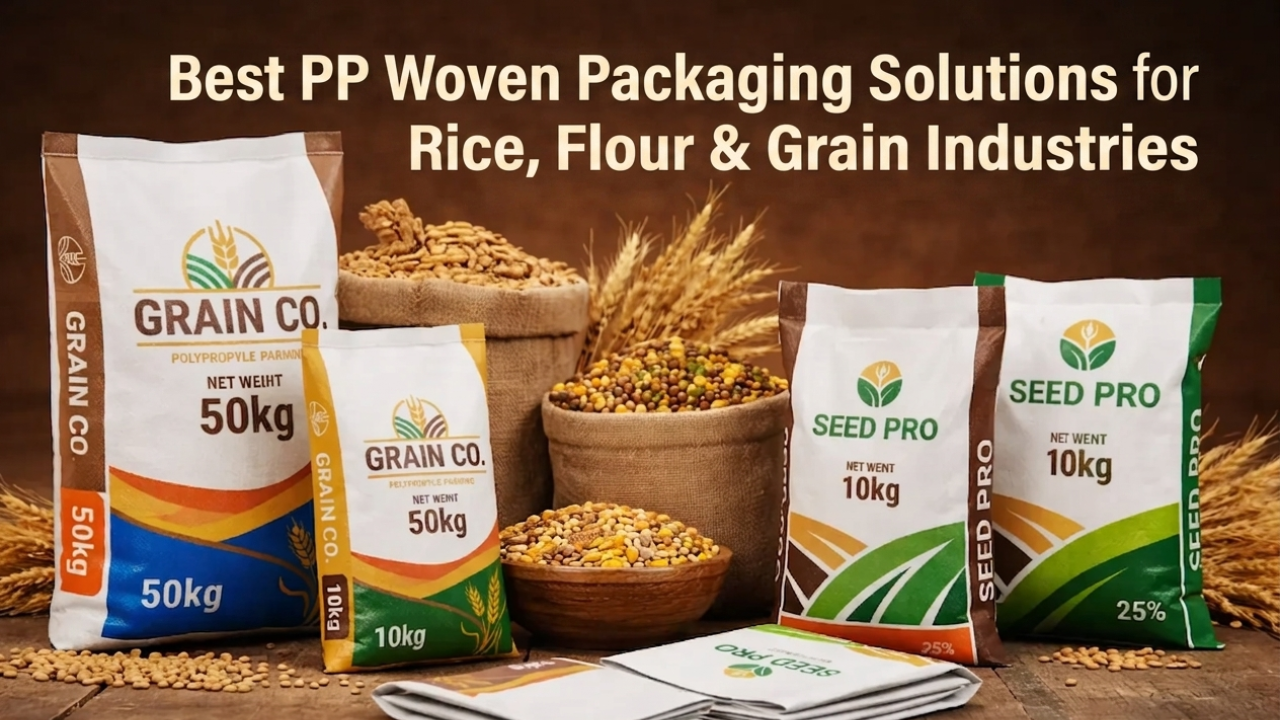
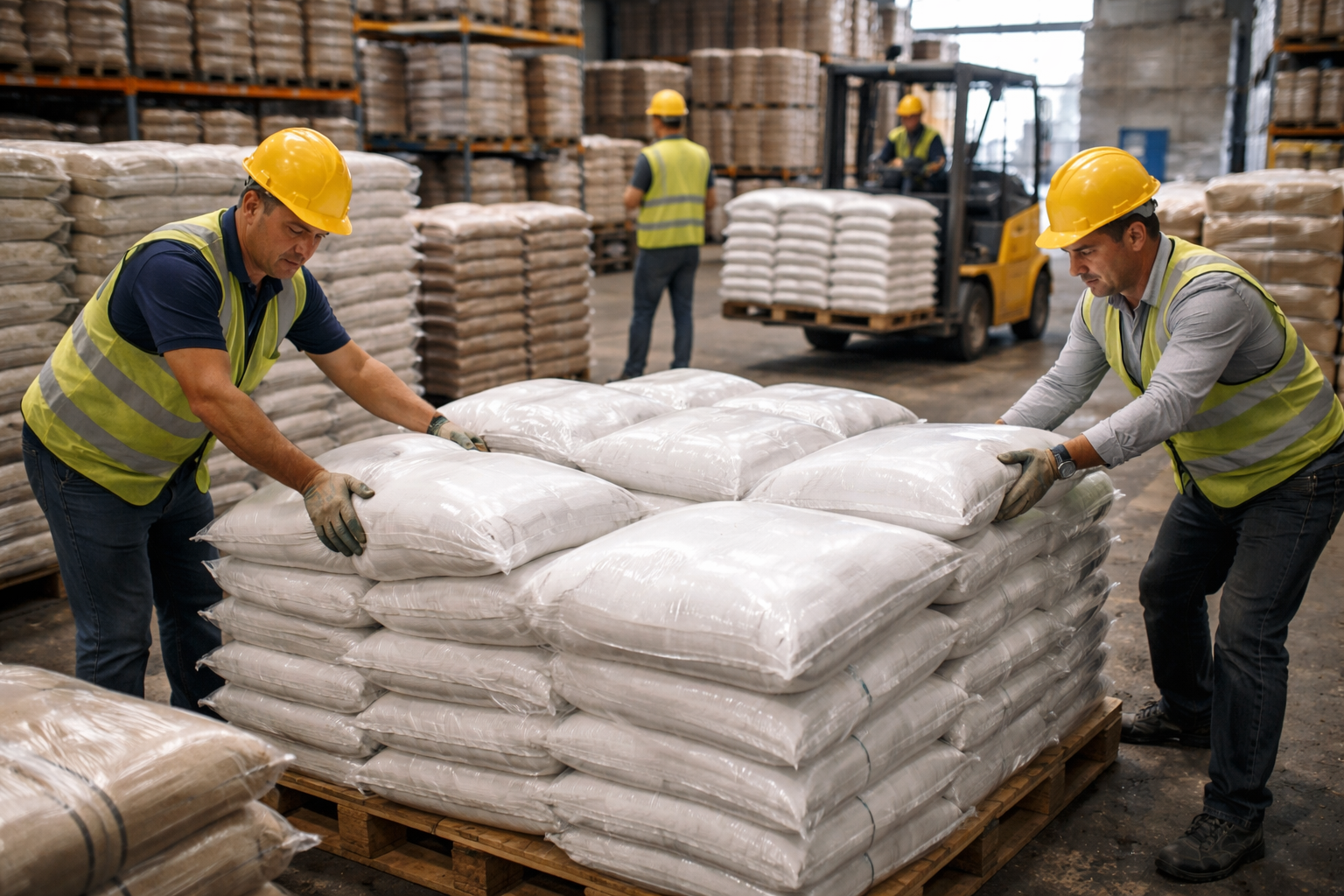
Standard breathable PP woven sack bags for short to medium duration storage of dry grains in controlled environments. The open weave structure allows full respiration and the hydrophobic fabric surface prevents moisture ingress from external sources.
Laminated woven polypropylene bags for grain products moving through multi-stage logistics chains including port handling, sea freight, or open warehouse storage. The lamination creates a full moisture barrier on the outer surface while the inner unlaminated fabric maintains breathability at the grain contact surface.
HDPE PP woven bags and PP HDPE woven bags offer an alternative tape material where specific chemical compatibility or stiffness profiles are required. For certain grain storage applications where the packaging environment creates unusual stress conditions, hdpe pp woven bags provide a structurally appropriate variant within the same woven sack category.
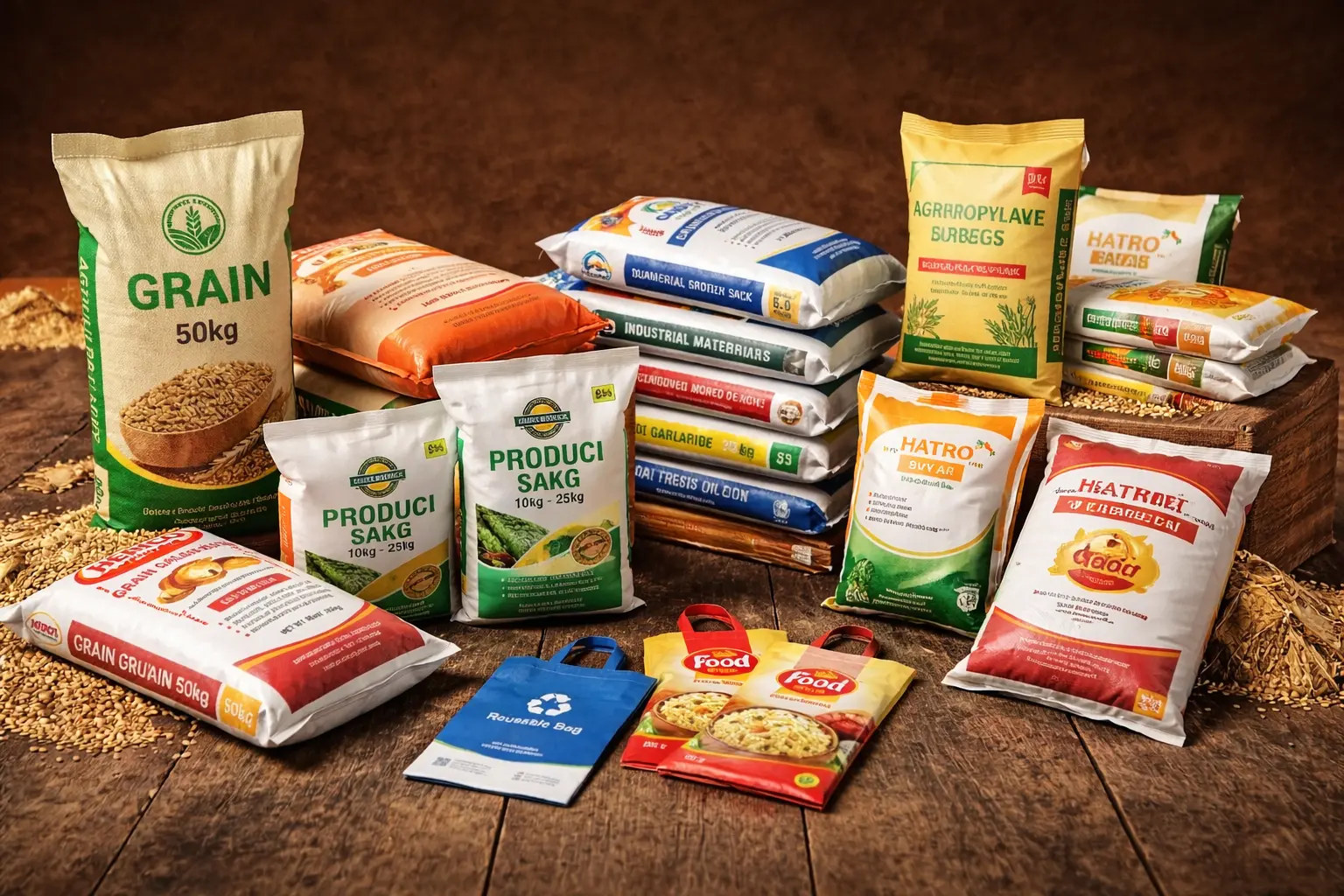
PP woven jumbo bags for bulk grain handling in silos, export terminals, and large-volume processing facilities where individual sack formats are impractical. The woven polypropylene bulk bag format scales grain handling from the standard 50 kg sack to 1,000 kg and beyond without changing the fundamental material advantage.
Oscar Polypack: The Industrial Packaging Solutions Partner Behind the Bag
When you evaluate a packaging bags manufacturer in India for your grain storage requirements, the question is not just whether they can produce a bag that passes a sample test. It is whether their manufacturing consistency, material sourcing, and supply reliability can support your operations at scale through the full agricultural season.
As a packaging material manufacturer with four production facilities, advanced circular loom infrastructure, and over 15 years of export experience, Oscar Polypack Pvt. Ltd. is positioned to be that partner. We supply pp woven bags to grain traders, rice millers, agro processors, flour manufacturers, and food packaging manufacturers across India and internationally.
We are recognised as a trusted pp woven bag manufacturer, a pp woven sack bag manufacturer, a pp woven bag supplier, and a packaging bags exporter to markets across 35+ countries. Our capability as a woven polypropylene bags manufacturer extends from standard grain sacks to custom printed laminated retail bags, from individual bag supply to raw fabric rolls for converters and industrial packaging solutions for large-scale agro-industrial operations.
We also operate as a plastic packaging manufacturer producing the full range of woven packaging formats, a custom packaging bags manufacturer capable of delivering bespoke specifications, and a food packaging manufacturer supplying food-grade woven bags to mills and food processors who require hygiene-compliant, food-safe packaging.
Whether you need poly woven bags suppliers for a seasonal procurement requirement or a long-term supply relationship with a polypropylene woven bags manufacturer who can guarantee batch consistency, Oscar Polypack is structured to deliver both.
The Verdict: PP Woven Wins on Performance. The Right Partner Makes It Seamless.
For commercial grain storage and transit across India’s diverse climate zones, long logistics chains, and competitive retail and export markets, PP woven bags outperform jute on every measurable operational parameter. Moisture resistance, structural durability, pest resistance, print quality, supply consistency, and cost predictability all favour polypropylene.
Jute retains relevance in narrow, specific contexts. For the majority of grain businesses operating at scale, the switch to PP woven has already happened or is overdue.
The remaining question is not whether to switch. It is who to source from.
Talk to Oscar Polypack Today. Your Grain Packaging Starts Here.
From standard 50 kg grain sacks to custom-printed laminated bags to bulk jumbo format, we manufacture every specification your grain storage operation requires.
Contact us and receive your custom quote within 24 hours.
📧 info@oscarpoly.com 📞 (+91) 990-995-4483 🏭 Plot No G 2135, GIDC Lodhika, Metoda, Rajkot, 360021, Gujarat, India
Oscar Polypack Pvt. Ltd. Packaging Bags Manufacturer, Exporter, and PP Woven Fabric Supplier. Serving 5,000+ businesses across India and 35+ countries since 2008.